
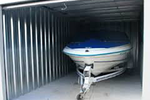
Here at Red Spud Storage, we understand that when the boat comes off the water for the season, it helps to have a local team ready to answer questions about where it goes next. In eastern Idaho, the answer starts with winterizing. Freezing nights arrive early in the fall and stay late into spring, and water left in a line or an engine block can freeze and crack it.
This checklist covers the steps to finish before an RV or boat goes into storage for the winter. Your owner's manual has the final word on your model. Use it alongside the list, and when you're ready, rent a space or unit online.
Winterize before the first hard freeze, not after it. A warm October afternoon is the right time to drain lines and run antifreeze through a system. Doing it in the dark during the first cold snap is how steps get skipped. If the RV or boat still has a trip or two left in the season, have the supplies on hand so you can finish the job the day you get home.
Water is the main risk inside an RV. Tanks, pipes, the water heater, and the pump can all hold water that expands when it freezes.
Drain the fresh, gray, and black tanks. Empty and flush the holding tanks at a dump station before storage. Then drain the fresh water tank.
Drain the water heater. Turn it off, let it cool, and open the drain plug and pressure-relief valve. Many RVs have a bypass valve so antifreeze doesn't fill the heater tank. Set it before the next step.
Open the low-point drains. Open every faucet, hot and cold, along with the low-point drains, so the lines empty fully. Some owners also blow the lines out with compressed air at low pressure.
Run RV antifreeze through the system. Use non-toxic RV antifreeze made for potable water systems, never automotive antifreeze. Pump it through until it runs pink from each faucet, the shower, and the toilet. Pour a little down each drain to protect the P-traps.
Close everything back up. Close the drains and faucets, and leave a note on the dash that the system is winterized so nobody turns the water on before spring.
Boats carry water in more places than it looks: the engine block, the cooling system, the lower unit, live wells, and bilge.
Flush and drain the engine. Flush the cooling system with fresh water, then drain it or fill it with marine antifreeze, following the engine maker's procedure for inboards, sterndrives, or outboards.
Change the oil and lower-unit gear oil. Old oil holds moisture and acids. Fresh oil going into storage protects the engine through the off-season.
Treat the fuel. Follow your engine maker's guidance on fuel stabilizer and tank level for winter storage. Before storing, ask Kevin how the facility handles fuel in stored boats and vehicles.
Drain live wells, bilge, and plumbing. Pull the drain plug once the boat is out of the water, and leave it out with a note on the helm.
Fog the engine if your manual calls for it. Fogging oil coats the internal parts against corrosion over a long layup.
For South Fork drift boats, the process is simpler, but water still finds the corners. Dry the hull, oarlocks, and storage boxes, and pull out anything that holds moisture, like life jackets, seat cushions, and waders.
These steps apply to both RVs and boats:
Batteries: disconnect them, or remove them and store them charged. A battery tender keeps a charge over a long winter.
Tires and trailers: inflate to the recommended pressure and check the trailer bearings, lights, and hitch before the season ends, so the trailer is ready to tow in spring.
Covers and openings: use a breathable cover rather than a plastic tarp, which can trap moisture. Close vents, block openings, and remove food, so the stored RV or boat doesn't draw mice.
Paperwork: check that registration and insurance stay current over the storage period. Insurance is available through the facility.
Where the RV or boat spends the winter matters almost as much as how it's prepped. Red Spud Storage is just off US-20 between Exit 337 and Exit 338 in North Rexburg, close to the South Fork of the Snake River. Rexburg also typically has significantly less snow on the ground than towns to the north and east. That makes it easier to reach a stored trailer, sled, or boat through the winter and get it out early in spring.
RV and car storage is available. Interior drive-through units let you pull a trailer in one door and out the other without backing up. Units have 7-foot doors and 8-foot interior height, so measure a boat on its trailer, motor and windshield included, before choosing a unit. The storage options page lists the unit types, and Kevin, the property manager, can help you match a space to what you're towing.
Current special: 50% discount for your first 4 months* on 10x20 or larger. *Must rent for 4 consecutive months for 50% Offer.
Rentals run month to month with prorated billing, so you pay for the time you use. Rent and pay online anytime, and set up autopay so the winter bill takes care of itself while the boat or RV sits. Secure gated keypad access means only renters with a code come through the gate.
Once the lines are drained and the battery is out, the last step is getting it under storage before the first storm. Rent your space online, stop by Red Spud Storage at 2866 Mendoza Dr, Rexburg, ID 83440, Monday–Saturday 8:00 AM–8:00 PM (closed Sunday), using the directions on our map page, or call (208) 408-1110 to talk through what you're storing this winter.